Check out our blog to learn more about how you can save money, plus other tips to help maintain your windows, doors, siding and roofing.
James Hardie vs. Engineered Wood Siding in Calgary: What Most Contractors Won't Tell You
June 15, 2026
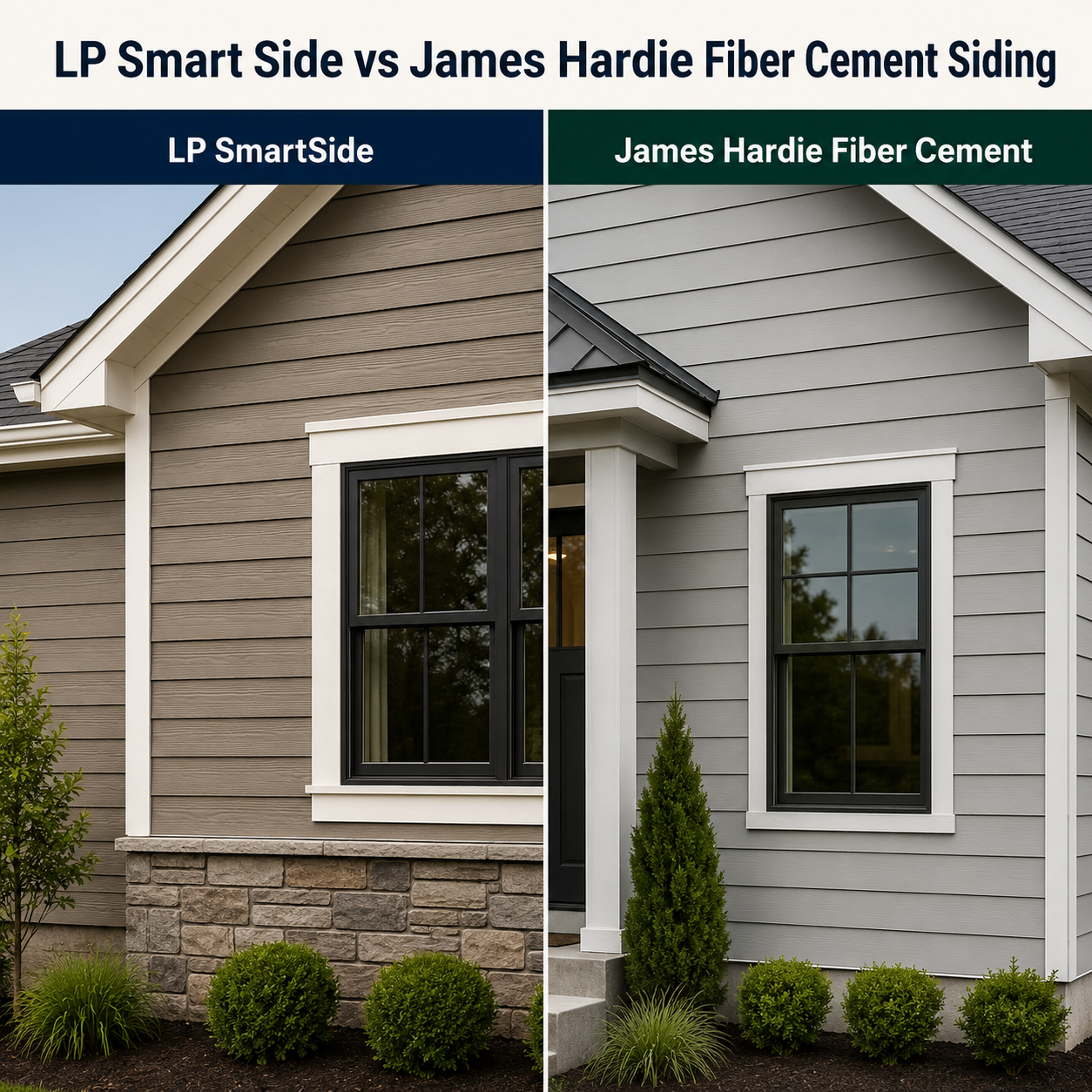
Here's something most siding contractors in Calgary won't say: James Hardie isn't the right answer for every home.
It's an excellent product. But it's also the product with the biggest marketing budget in the category — and that has a way of making it the default recommendation regardless of your situation.
We install James Hardie. We also install LP SmartSide Engineered Wood Siding, Steel Siding and Vinyl Siding. We don't have a financial incentive to push one over another. So here's the honest breakdown for Calgary homeowners.
Why Calgary Is Brutal on Siding (And Why Material Selection Actually Matters Here)
Most Canadian cities are hard on siding. Calgary is in a different category.
Hail: The August 2024 hailstorm caused nearly $2.8 billion in insured losses across Calgary. 2025 saw additional significant hail events. This is not a once-in-a-decade risk — it's a regular season reality.
Chinooks: Temperature swings of 20–30°C within hours put constant thermal stress on siding joints, fasteners, and panel edges.
UV exposure: At 1,048 metres elevation, Calgary receives more intense UV than most Canadian cities — accelerating fade and material degradation faster than the product specs suggest.
Freeze-thaw cycles: Any moisture that gets behind or into siding will expand and contract through winter, widening gaps and cracking panels.
The right siding for Calgary isn't just the most popular one. It's the one engineered to handle that specific combination.
James Hardie Fiber Cement: Where It Wins
James Hardie is genuinely excellent for Calgary homes, and there are specific situations where it's the clear first choice.
Hail resistance: Fiber cement is among the hardest exterior cladding materials available for residential use. It doesn't crack or dent from hail the way vinyl does, and its density means impact damage is typically surface-level rather than structural.
Fire resistance: Hardie's fiber cement products are rated non-combustible (ASTM E136) with a flame spread index of 0. For homes in or near the WUI (wildland-urban interface) areas around Calgary, this matters.
Dimensional stability: Hardie's HZ5 products (designed for Canadian climates) resist shrinking, swelling, and cracking through freeze-thaw and Chinook conditions.
Painting ability and colour longevity: Hardie's ColorPlus factory-finished option holds colour well and can be repainted down the road, giving you long-term design flexibility.
The honest downsides:
Hardie board is heavy. Installation requires more labour, which drives up cost. Expect $9–$15 per square foot installed.
It's not a great insulator on its own. You'll likely need additional rigid foam or insulated sheathing beneath it to meaningfully improve your home's thermal envelope.
Repairs require colour-matched paint and some skill. Mismatched patches are common when repairs are done years after installation.
Engineered Wood Siding: The Case Calgary Contractors Rarely Make
Engineered wood siding — specifically LP SmartSide, which we supply and install — doesn't get the same marketing airtime as Hardie. It should.
Here's what it does that fiber cement doesn't:
1. Better natural insulation value Wood-based products have a higher inherent R-value than fiber cement. LP SmartSide provides better thermal performance per inch — meaningful in Calgary winters where every bit of wall insulation works.
2. Lighter weight, lower labour cost Engineered wood is significantly lighter than fiber cement, which reduces installation time and labour cost. For the same wall area, the installed cost of quality engineered wood typically runs 15–25% less than Hardie — without sacrificing performance.
3. Authentic wood appearance Engineered wood products achieve the cedar and wood-grain look that fiber cement approximates. If the aesthetic of your home calls for it — heritage character, rustic modern, acreage properties — engineered wood is truer to the original.
4. Engineered specifically for moisture resistance This is the historical knock on wood siding, and it's been largely solved. LP SmartSide uses a resin-infused manufacturing process that makes it dimensionally stable and highly resistant to the moisture infiltration that destroys traditional wood siding. It's not your grandfather's T1-11.
The honest downside:
Not all engineered wood products are equal. LP SmartSide is a quality product. Builder-grade engineered wood from big box stores is not — and some contractors don't distinguish between them in their quotes.
Which One Is Right for Your Home?
Choose James Hardie if:
Your home is in an area that took direct hail hits in 2024 or 2025 and you want maximum impact resistance going forward
Fire resistance is a priority (acreage near treed areas, WUI zones)
You want the lowest-maintenance exterior possible and are willing to pay the premium
Choose engineered wood if:
Your home's architectural character calls for an authentic wood aesthetic
You want better thermal performance without adding rigid foam insulation
Budget matters and you're willing to plan for repainting every 10–15 years
You're replacing cedar or wood lap siding and want to maintain the look
Choose quality vinyl if:
It's a rental property or a home you'll sell within 10 years
Absolute lowest maintenance is the priority
Budget is the binding constraint
What About Mixing Materials?
One of the strongest trends in Calgary exterior renovation right now is mixed cladding — combining two materials for visual interest and performance where each makes sense.
A common approach we install: James Hardie on the lower half of the home (higher hail exposure, more impact from landscaping and ground splash) and engineered wood or on the upper portions where aesthetics and thermal performance matter more.
Done well, mixed cladding costs less than full-home Hardie while achieving a premium look and smart material placement.
What to Ask Any Siding Contractor Before You Sign
These questions separate informed contractors from salespeople:
What specific product line are you quoting? (Not just "Hardie" — is it HardiePlank, HardiePanel, ColorPlus? Not just "engineered wood" — what brand and series?)
What underlayment and house wrap are included? A quality siding job is a system, not just the panel on the outside.
How do you handle sheathing repairs discovered during tear-off?
What's the warranty on labour vs. product? These are different — and labour warranties vary enormously between contractors.
Do you carry WCB and liability insurance in Alberta?
Get a No-Pressure Assessment
We'll come to your home, look at what you have, and give you an honest recommendation — including when repair is the right answer instead of replacement.
We look forward to the opportunity to get to know you and discuss the efficiency and comfort solutions we can offer for you, your family, and your home.